

How to Brew Loose-Leaf Tea Without a Teapot: 4 Everyday Methods
You do not need a teapot to drink good loose-leaf tea. What tea needs is hot water, space to open up, and someone paying attention to the clock. A mug and a fine-mesh strainer from the kitchen drawer can make a better cup than a neglected pot with a clogged spout.
Below are four ways to brew loose leaf with tools you already own. Choose based on the tea in front of you, how many cups you want, and how much washing up you feel like doing.
Two Numbers Worth Knowing Before You Start
Every method works better when you know roughly how much leaf to use and how hot the water should be. You can adjust after tasting, but this is a sensible starting point.
For leaf, aim for about 2 to 3 grams per 240 ml (8 oz) cup, which is a rounded teaspoon of most broken-leaf teas. Whole-leaf oolongs and large silver-needle whites are bulky and light — a single teaspoon may barely weigh anything, so use two and expect a softer cup. If you keep a small kitchen scale, 3 g for black and oolong and 2 to 3 g for green is a reliable default.
For water, use this as your rough guide:
- Green and white tea: 160–180°F (70–80°C), or water that has sat off the boil for a few minutes.
- Oolong: 185–200°F (85–95°C).
- Black tea: 200–212°F (95–100°C), just off a rolling boil.
- Herbal blends and tisanes: full boil, no waiting.
No thermometer? Boil the kettle, then let it rest: about two to three minutes for green tea, one minute for oolong, and pour straight away for black and herbal. It is approximate, but it lands close enough to taste the difference.
Method 1: A Mug and a Fine-Mesh Strainer
This is the fastest route from craving to cup, and the method most worth mastering first.
- Warm the mug with hot tap water, then dump it. A cold mug pulls heat out of a small brew surprisingly fast.
- Put the leaves directly into the mug. No bag, no basket, no fuss.
- Pour the water over them and start a timer.
- Taste early and often. Around one minute for green, two for oolong, three for black. After that, taste every 30 seconds. When the flavor shifts from sweet to drying, it is done.
- Set a fine-mesh strainer over a second mug and pour the tea through it.
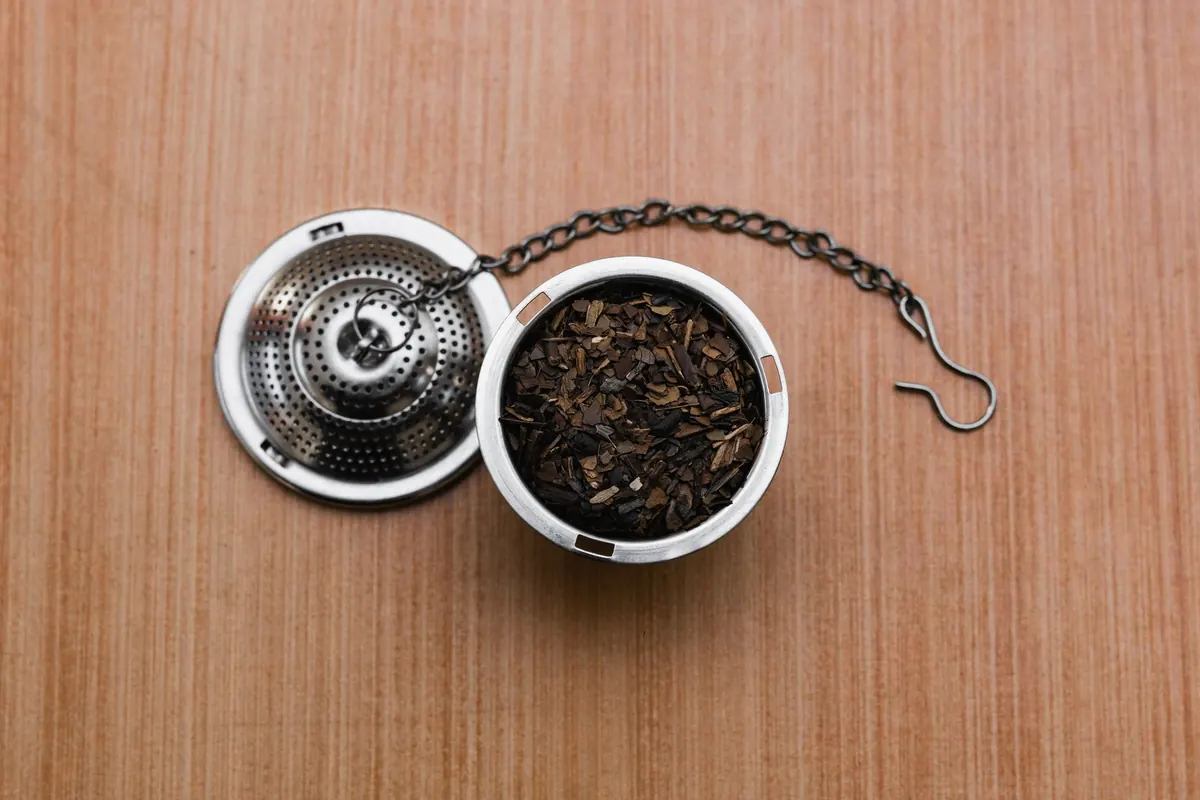
If you would rather drink from the same mug you brewed in, use a basket infuser that rests on the rim and lift it out when the tea is ready. Either way, do not squeeze the leaves to get the last drops out — that presses out the bitter compounds you spent the whole brew avoiding. Just tap the strainer against the rim and let gravity finish the job.
Fine particles slipping through the mesh are normal and harmless. They settle at the bottom of the cup within a minute.
Method 2: The French Press
A French press is a teapot with a plunger, and the mesh is coarse enough for full-leaf tea but too coarse for dusty fannings — which is exactly the point, because whole leaves steep cleaner and sweeter.
Add the leaf to the bottom, pour your water, and set a timer. Three to four minutes for black tea, two for green, five or more for herbal blends. Then press the plunger down slowly and pour every drop into a mug or a second vessel.
That last step is the one people skip, and it is the one that matters. Tea left sitting in a press keeps steeping. A cup that tastes bright at four minutes turns harsh by ten. Decant all of it at once, even if you are not drinking it immediately.
The press also makes resteeping easy: add more hot water to the same leaves and give it 30 to 60 seconds longer than the first round. Two or three good steeps from a whole-leaf oolong is normal. Rinse the press as soon as you are finished, though — dried leaf stuck to a plunger mesh is the one real chore of this method.
Method 3: The Mason Jar
A quart jar is a brewing vessel that happens to have a lid, which makes it ideal for cold brewing. Add one heaping teaspoon of leaf per cup of cold water, screw the lid on, and refrigerate. Six hours is enough for most teas; eight to twelve gives a fuller body. Green tea does better on the shorter end, herbal blends on the longer end.
Strain it through your fine-mesh sieve into a second jar and it keeps for two or three days in the fridge. Cold-brewed tea tastes rounder and less astringent than hot-brewed tea, and it is nearly impossible to ruin if you walk away and forget about it.
For hot tea, treat the jar as you would a teapot: add leaf, pour hot water, steep, then strain into mugs. Use a canning jar made for heat rather than a thin decorative one, and never move a jar straight from the freezer to boiling water.
Method 4: Grandpa Style, Leaves Right in the Mug
Put a scant teaspoon of leaves in a mug, pour hot water on top, and drink it as it cools. Top up with more hot water when the cup is about a third full. This is how a great deal of tea is drunk around the world, and it requires no equipment at all beyond a mug and a kettle.
It rewards the right tea. Whole-leaf oolongs, pu'er, and sturdy black teas handle the long contact with water gracefully. Fragrant greens and finely cut blends turn bitter quickly, so save those for the strainer method.
Two habits make it work: use fewer leaves than you would for a quick steep, and reach for the kettle as soon as the cup tastes strong rather than waiting it out. A splash of hot water resets the balance.
A note on dusty blends
Flavored blends and finely cut teas often leave grit in the cup. Line your strainer with an unbleached paper coffee filter before pouring. It drains slowly, so give it a moment, but the tea comes out clear and clean.
Make the Next Cup Better
Do not dump your leaves after one steep. Most loose-leaf teas give two to four rounds, and the second is often the best. Rinse your gear right after use — thirty seconds of warm water now saves scrubbing later.
Above all, taste before you trust a timer. Water hardness, leaf size, and the shape of your mug all shift the numbers, and your palate is a better judge than any chart. Taste at the short end of the range, decide, and adjust next time. Write it down if you want to repeat a particularly good cup.
One last thing: longer steeps and stronger brews extract more caffeine, and herbal blends can be potent in ways that are not always obvious. If you are pregnant, breastfeeding, or managing a condition affected by caffeine or herbs, check with a healthcare professional about what suits you.
Photo: Lucas Oliveira / Pexels