How to Clean and Care for Your Teapot So It Lasts for Years
A teapot is one of the few kitchen objects you can own for decades and never think about — provided you treat it well in the five minutes after every pour. Most teapots don't wear out. They get cracked by a careless rinse under cold water, dulled by an abrasive powder, or quietly soured by tea leaves left sitting overnight. The care routine is short, inexpensive, and mostly about restraint.
Two Rules That Apply to Every Teapot
Whatever your pot is made of, two habits do most of the work.
Avoid sudden temperature changes. Glass and glazed ceramic can crack when hot meets cold, and the enamel inside a cast iron pot can craze the same way. Never pour boiling water into a cold pot, and never run a hot pot under the cold tap. Warm the pot first with a little hot water, swirl it, and pour it out. That single step also improves your tea, since the brew stays hotter from the first steep.
Empty it the same day. Wet tea leaves are acidic and they stain on contact. Leave them overnight and you're essentially dyeing the inside of your pot. Tip the leaves out, rinse, and leave the pot open to dry before you go to bed. It takes forty seconds.
A small kit covers almost everything: a soft sponge, a bottle brush for the spout, a folded cloth for the rim, warm water, baking soda, and white vinegar. That's it. No scouring pads, no bleach, and no dishwasher unless the manufacturer explicitly says otherwise.
Glass Teapots: Keep the Clarity
Glass is the most forgiving material to clean and the least forgiving to handle. Borosilicate pots handle heat well; thinner decorative glass does not. Either way, warm the pot before brewing and let it cool before washing.
For daily cleaning, warm water and a drop of mild dish soap are fine — glass doesn't absorb anything, so there's no reason to be precious about it. Rinse thoroughly so no soap film remains, then dry with a lint-free cloth to avoid water spots.
Hard water leaves a cloudy film that soap won't touch. Fill the pot with equal parts warm water and white vinegar, let it sit for fifteen to thirty minutes, then rinse well. For tannin rings around the waterline, make a paste of baking soda and a little water, rub gently with your fingertip or a soft cloth, and rinse. Skip anything abrasive; glass scratches easily, and once it does, those scratches hold onto stains.
Ceramic and Porcelain: Gentle Is the Rule
Glazed ceramic is tough but not indestructible. Wash it by hand with warm water and a little mild soap, and use a soft sponge rather than a brush on any painted or gilded decoration. Gold trim and hand-painted patterns can wear away in a dishwasher, so if your pot has either, keep it out of the machine entirely.
Don't soak a ceramic pot for hours. Prolonged soaking lets water seep into unglazed rims and seams, and it can loosen the fit of a lid over time. If you have a crackle-glaze pot, don't panic when the fine lines slowly darken — that's tea seeping into the glaze cracks, and for many drinkers it's part of the charm. It's cosmetic, not a defect, and it won't affect the taste of your tea.
For interior staining, a baking soda paste applied with a soft cloth lifts most discoloration. Rinse thoroughly afterward, because baking soda left behind will flatten the flavor of your next pot.
Cast Iron: Dry It Like You Mean It
Rust, not dirt, is what kills cast iron teapots. Most Japanese-style tetsubin have an enameled interior, which can be rinsed with warm water and a touch of mild soap, then wiped dry. Never scrub the inside with steel wool or abrasive powder — you'll scratch the enamel, and once it's compromised, the iron underneath starts to rust.
If your pot has a bare, seasoned iron interior, skip the soap. Rinse with hot water only, wipe it dry inside and out, and set it on low heat for a minute or two until every trace of moisture is gone. Pay attention to the spout, the rim, and the underside of the lid — that's where water hides.
- Never leave water standing in a cast iron pot.
- Never store the lid sealed tightly on the pot; leave it slightly ajar so air can circulate.
- Never put a cast iron teapot on a stove burner unless it's specifically made for direct heat.
- Always dry the outside too — condensation and splashes cause rust just as readily as an interior puddle.
Unglazed Clay: No Soap, Ever
Yixing, Tokoname, and other unglazed clay pots are porous. They absorb tea oils and gradually build a patina that many enthusiasts value more than the pot itself. That porosity is exactly why soap is a problem: clay holds onto detergent, and every subsequent pot of tea will carry a faint floral-chemical note you cannot rinse away.
Clean clay with hot water only. Rinse, rub the interior gently with your fingers or a soft cloth — no scrub brushes — and let it dry completely with the lid off. Some people keep one pot for one type of tea, since a well-used clay pot will carry traces of what it has brewed. That's a preference, not a rule, but it's a good one if you drink a lot of oolong or pu'er.
Store clay pots dry and open. A pot sealed while damp is a pot growing mold, and mold in porous clay is genuinely hard to remove.
Stubborn Stains, Scale, and Lingering Smells
Most problems have a simple fix. Test on a small area first, and rinse far longer than you think you need to.
- Tannin stains: baking soda paste, soft cloth, gentle circles, rinse well.
- Hard water scale: equal parts warm water and white vinegar, soak twenty to thirty minutes, rinse thoroughly. Citric acid dissolved in warm water works the same way and smells milder.
- Stale or musty smell in glazed pots: fill with warm water and a spoonful of baking soda, soak overnight, rinse, and air dry with the lid off.
- Odors between uses: a spoonful of dry baking soda left in a completely dry pot absorbs smells. Rinse before brewing again.
- Spout buildup: a bottle brush and warm water. Don't poke wire or skewers down a spout — you can chip the interior.
If a clay pot develops mold, wash it with hot water and baking soda, dry it fully in moving air, and check the smell. If it persists after two attempts, retire the pot. No cleaning method is worth risking your health for a cheap piece of clay.
Storage and the Small Habits That Add Years
Where a teapot lives matters as much as how you wash it. Keep pots on an open shelf rather than crammed in a cupboard, and never stack them. A lid resting on a pot for months can leave a permanent ring, and a small knock against a shelf edge is all it takes to chip a spout.
Warm the pot before every brew. Rinse it the moment you've poured the last cup. Dry the outside as carefully as the inside. Put it away with the lid off, or at least tilted, so air moves through it.
Do those four things and your teapot will outlast most of the appliances in your kitchen. It will also make better tea, because a clean pot doesn't compete with what you're brewing. That's the whole point.
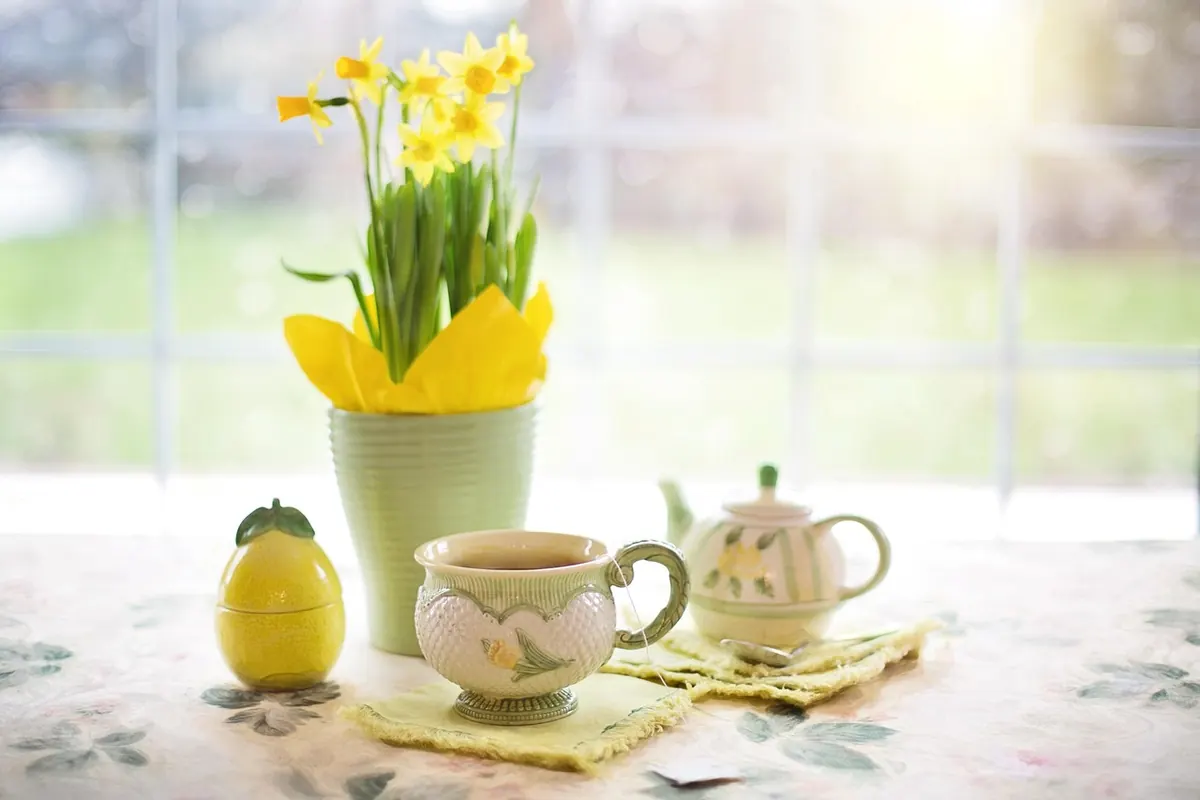
Photo: JillWellington / Pixabay