
7 Common Tea Brewing Mistakes and How to Fix Them
The kettle clicks off and you pour. Three minutes later you have a cup that tastes like wet cardboard. Nothing was technically wrong — the water was hot, the tea was tea — but a few small decisions between the kettle and the mug made the difference.
Brewing isn't complicated, but it is specific. Tea responds to temperature, time, quantity, and water quality, and it responds fast. Get those four things right and even a supermarket teabag improves noticeably; get them wrong and a genuinely good leaf tastes flat or harsh.
Here are the seven mistakes that turn up most often, and what to do instead.
1. Treating Every Tea Like Black Tea
Green tea brewed with rolling-boiling water turns sharp and grassy in a way that has nothing to do with the quality of the leaf. Heat pulls out bitter compounds faster than it pulls out the sweet, savory ones, and no amount of honey hides that.
Different teas want different temperatures because their leaves are processed differently. Delicate green and white teas have thin cell walls and give up flavor quickly; black teas, aged teas, and herbal blends need more heat to extract fully.
- White and green tea: 70–80°C / 160–175°F, 2–3 minutes
- Oolong: 85–95°C / 185–205°F, 2–4 minutes
- Black tea: 95–100°C / 200–212°F, 3–5 minutes
- Pu'er and other aged or compressed teas: boiling, 2–4 minutes, after a quick rinse
- Herbal blends (rooibos, mint, chamomile): boiling, 5–7 minutes
If your kettle has no temperature settings, you don't need to buy one today. Boil the water, pour it into a cold mug or a second pot, and let it sit for a minute or two. That alone drops it into green tea range. Pouring from a little height cools the water slightly and adds oxygen, too.
2. Over-Steeping (and Under-Steeping)
Leaving tea in the water past its window is the most common reason a good cup goes wrong. Tannins that would have stayed in the leaf keep dissolving, and what was bright turns dry and grippy on the tongue.
Set a timer. Not a mental one — the three minutes you think you waited while answering a message is usually five. If you drink from a mug with the bag still in it, get the bag out, or use a basket infuser you can simply lift.
Under-steeping is a quieter mistake. Pale, thin, faintly sour tea usually means the leaf was rushed, not that the tea is weak. Add time in 30-second increments rather than dumping in another scoop.
Bitter tea is rarely bad tea. It's tea that stayed in the water too long.
3. Guessing the Leaf-to-Water Ratio
Most instructions say "one teaspoon per cup," which is a reasonable starting point and a poor rule. A teaspoon of fine fannings weighs far more than a teaspoon of long, wiry whole leaves. Measure once with a kitchen scale and you can stop guessing.
A useful baseline for loose leaf is roughly 2–3 grams per 200 ml (about 7 oz) of water. For most teas that's one heaped teaspoon; for fluffy leaves like silver needle white tea or large-leaf oolong, it's closer to two.
How to calibrate in three cups
Brew one cup with 2 g, one with 3 g, and one with 4 g, using the same water and the same steeping time. Taste them side by side. Whichever lands where you want — flavorful but not harsh, strong but not burnt — becomes your house number for that tea. Write it on the tin in pencil.
4. Brewing With Bad-Tasting Water
Tea is almost entirely water, so the water matters as much as the leaf. If your tap water smells of chlorine or tastes flat and metallic, your tea will taste like that too, just with a note of jasmine.
Freshly drawn filtered water is the easy win. Two things to avoid: water that has been boiled repeatedly in the kettle, which loses oxygen and makes tea taste duller, and heavily softened water, which can taste salty and leave a film on the surface. Ordinary tap water that tastes good on its own is usually fine.
5. Storing Tea Badly
Tea is dry and porous, which means it takes on whatever is around it. Light, heat, air, and odor are the four things to keep it away from.
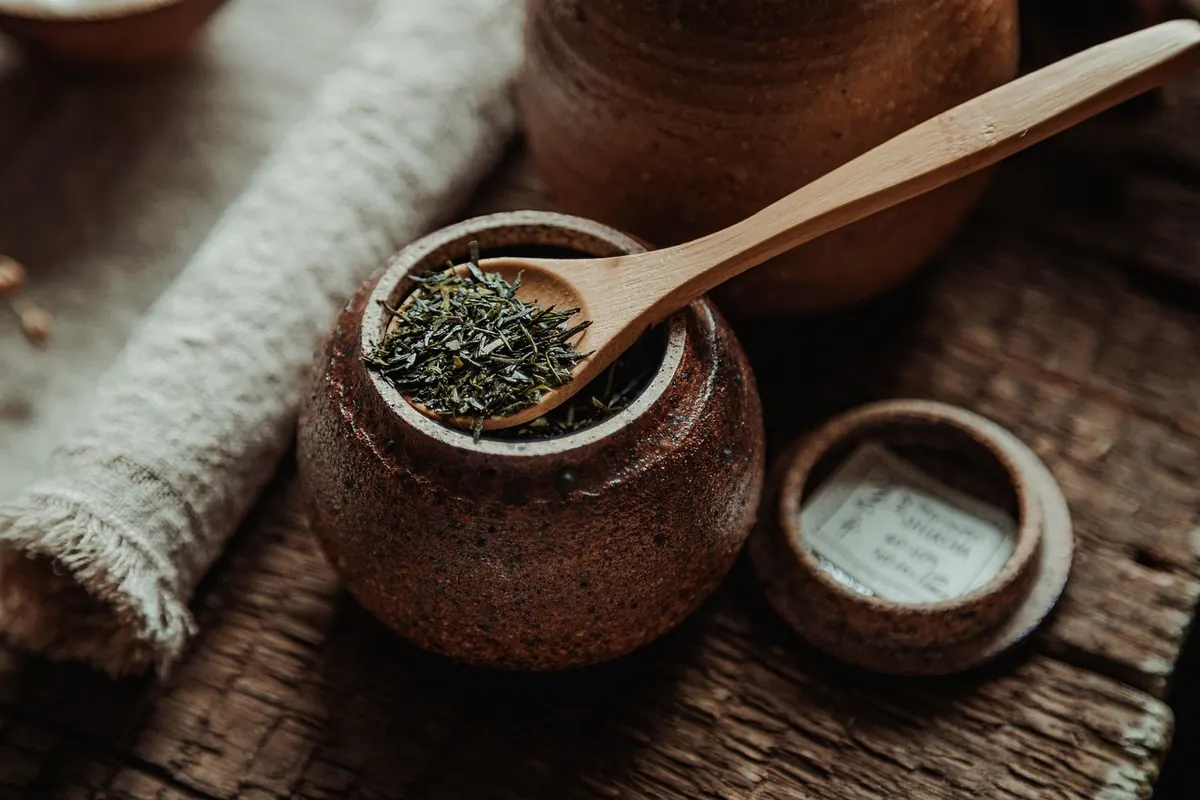
- Keep it in an opaque, airtight tin — not a glass jar on a sunny shelf
- Store it away from the stove, the spice rack, and the coffee beans
- Buy amounts you'll finish in a few months rather than a kilo for the back of the cupboard
Stale tea isn't harmful, just disappointing: flat, papery, with little aroma left. You can nudge it back with slightly more leaf and a slightly longer steep, or use it for cold brew, where the lack of heat forgives a lot.
6. Brewing in a Cold Pot
A cold pot steals heat from the water the moment it goes in. That's why tea brewed at home in a thick ceramic pot often tastes weaker than the same tea made elsewhere — someone warmed the vessel first.
Fill your pot or mug with hot water, let it stand for 20 seconds, then empty it and brew. It costs nothing and keeps the first minute of steeping at the temperature the leaf actually wanted. This matters most for oolong, black, and pu'er, and for anyone brewing a small amount in a large pot.
7. Fiddling With the Cup
Small habits around the mug shape the result more than most people expect.
- Don't squeeze the bag. Pressing out the last drops pushes fine particles and harsh tannins into the cup. Let it drip.
- Don't stir hard. A gentle swirl is enough; vigorous stirring makes tea cloudy and more bitter.
- Don't judge at the first sip. Very hot tea masks its own sweetness. Give it a minute — most flavors come into focus as it cools from scalding to pleasantly warm.
- Don't toss the leaves after one steep. Whole-leaf green, oolong, and black teas often give two, three, or four good infusions. Add 20–30 seconds each round.
A Simple Reset for Your Next Cup
Pick one cup tomorrow and change four things: filtered water, the right temperature, roughly 2–3 grams of leaf per 200 ml, and a timer set to the low end of the range for that tea. Taste it when the timer goes off. Thin? Add 30 seconds next time. Harsh? Come down.
Keep a note for a week — tea, amount, temperature, time, and one word for how it tasted. That's the whole system. Four lines a day and you'll know more about your kettle, your water, and your own taste than any instruction on a box can tell you.
One small caution: let very hot tea cool for a minute or two before drinking. Scalding drinks are rough on your mouth and throat, and they hide the flavors you just worked to bring out.
Photo: Jakub Zerdzicki / Pexels